Great moments in science (if Twitter had existed)

Dean Burnett: What if Twitter had been around at the time of famous scientists and scientific breakthroughs?
Source: www.theguardian.com
Be sure to read the comments too.
Viral Bioinformatics Research Centre
Chris Upton, University of Victoria, Canada
Dean Burnett: What if Twitter had been around at the time of famous scientists and scientific breakthroughs?
Source: www.theguardian.com
Be sure to read the comments too.

Robert F. Kennedy Jr. is coming out with a new book that claims thimerosal in vaccines causes autism. This claim has been thoroughly discredited, but RFK Jr. believes that it’s all a big conspiracy and that he’s right. His crazy anti-vaccine views coupled with his fame make for an especially dangerous combination.
Source: www.forbes.com

This title should really read “Practical data management takes its show ACROSS the road” because that’s what I’m actually doing. Next week, I’ll be a co-instructor for the second Data Carpentry bootcamp at MSU’s BEACON Center, which is right across the street from me. Who said agricultural ecologists don’t get to travel?

Summary: Codon optimization has been widely used for designing synthetic genes to improve their expression in heterologous host organisms. However, most of the existing codon optimization tools consider a single design criterion and/or implement a rather rigid user interface to yield only one optimal sequence, which may not be the best solution. Hence, we have developed Codon Optimization OnLine (COOL), which is the first web tool that provides the multi-objective codon optimization functionality to aid systematic synthetic gene design. COOL supports a simple and flexible interface for customizing various codon optimization parameters such as codon adaptation index, individual codon usage and codon pairing. In addition, users can visualize and compare the optimal synthetic sequences with respect to various fitness measures. User-defined DNA sequences can also be compared against the COOL optimized sequences to show the extent by which the user’s sequences can be further improved.
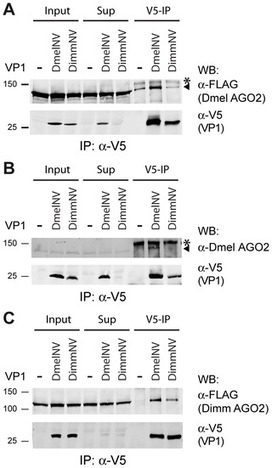
The ongoing conflict between viruses and their hosts can drive the co-evolution between host immune genes and viral suppressors of immunity. It has been suggested that an evolutionary ‘arms race’ may occur between rapidly evolving components of the antiviral RNAi pathway ofDrosophila and viral genes that antagonize it. We have recently shown that viral protein 1 (VP1) of Drosophila melanogaster Nora virus (DmelNV) suppresses Argonaute-2 (AGO2)-mediated target RNA cleavage (slicer activity) to antagonize antiviral RNAi. Here we show that viral AGO2 antagonists of divergent Nora-like viruses can have host specific activities. We have identified novel Nora-like viruses in wild-caught populations of D. immigrans (DimmNV) and D. subobscura (DsubNV) that are 36% and 26% divergent from DmelNV at the amino acid level.
Source: www.plospathogens.org

Next generation sequencing (NGS) has revolutionized biomedical research in the last decade and led to a continues stream of developments in bioinformatics addressing the need for fast and space efficient solutions for analyzing NGS data. Often researchers need to analyze a set of genomic sequences which stem from closely related species or are indeed individuals of the same species. Hence the analyzed sequences are very similar. For analyses where local changes in the examined sequence induce only local changes in the results it is obviously desirable to examine identical or similar regions not repeatedly.
Rotaviruses (RV) are ubiquitous, highly infectious, segmented double-stranded RNA genome viruses of importance in public health because of the severe acute gastroenteritis they cause in young children and many animal species. They are very well adapted to their host, with symptomatic and asymptomatic reinfections being virtually universal during the first 3 years of life. Antibodies are the major arm of the immune system responsible for protecting infants from RV reinfection. The relationship between the virus and the B cells (Bc) that produce these antibodies is complex and incompletely understood: most blood-circulating Bc that express RV-specific immunoglobulin (Ig) on their surface (RV-Ig) are naive Bc and recognize the intermediate capsid viral protein VP6 with low affinity. When compared to non-antigen-specific Bc, RV-Bc are enriched in CD27+ memory Bc (mBc) that express IgM. The Ig genes used by naive RV-Bc are different than those expressed by RV-mBc, suggesting that the latter do not primarily develop from the former. Although RV predominantly infects mature villus enterocytes, an acute systemic viremia also occurs and RV-Bc can be thought of as belonging to either the intestinal or systemic immune compartments. Serotype-specific or heterotypic RV antibodies appear to mediate protection by multiple mechanisms, including intracellular and extracellular homotypic and heterotypic neutralization. Passive administration of RV-Ig can be used either prophylactically or therapeutically. A better understanding of the Bc response generated against RV will improve our capacity to identify improved correlates of protection for RV vaccines.
Source: www.asmscience.org
There are 180 currently recognized species of RNA virus that can infect humans, and on average, 2 new species are added every year. RNA viruses are routinely exchanged between humans and other hosts (particularly other mammals and sometimes birds) over both epidemiological and evolutionary time: 89% of human-infective species are considered zoonotic and many of the remainder have zoonotic origins. Some viruses that have crossed the species barrier into humans have persisted and become human-adapted viruses, as exemplified by the emergence of HIV-1. Most, however, have remained as zoonoses, and a substantial number have apparently disappeared again. We still know relatively little about what determines whether a virus is able to infect, transmit from, and cause disease in humans, but there is evidence that factors such as host range, cell receptor usage, tissue tropisms, and transmission route all play a role. Although systematic surveillance for potential new human viruses in nonhuman hosts would be enormously challenging, we can reasonably aspire to much better knowledge of the diversity of mammalian and avian RNA viruses than exists at present.
Source: www.asmscience.org
It's my #Twitterversary! I have been on Twitter for 12 years, since 26 Jun 2008 (via @twi_age).
Top #tweeted story in #bioinformatics: Liftoff: an accurate gene annotation mapping tool | bioRxiv https://www.biorxiv.org/content/10.1101/2020.06.24.169680v1, see more http://tweetedtimes.com/v/1343?s=tnp
Reminder: Do you use the Pathway Tools software? We urgently need your letters of support for our grant application by today! See http://www.ai.sri.com/pkarp/misc/ptletter.txt. Your letter doesn't need to be long; please help us out any way you can! #Bioinformatics
Our ProFit software is now available as a docker image! Zero install, just download a little wrapper script and run it. #zeroinstall #docker #structuralbiology #bioinformatics http://www.bioinf.org.uk/software/profit/